In the frantic world of artificial intelligence, few projects have captured the internet’s imagination quite like OpenClaw. Born just weeks ago as “Clawdbot,” this open-source AI agent exploded onto the scene, racking up over 113,000 GitHub stars in under a week—a growth rate that eclipsed even last year’s top projects.
Developed by Austrian programmer Peter Steinberger, OpenClaw promises to be more than a chatbot. It claims to be a proactive digital assistant that lives on your computer, chats via your favorite apps, and actually does things for you.
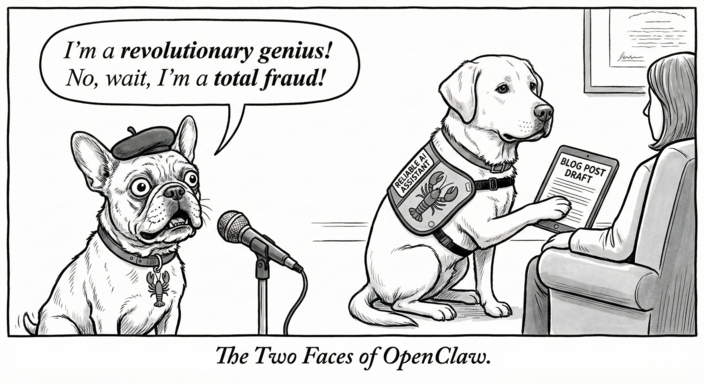
But amid the hype, security scares, and rapid rebrands (changing from Clawdbot to Moltbot, and finally OpenClaw due to trademark clashes with Anthropic), one question looms: Is OpenClaw a neurotic, high-maintenance French Bulldog—trendy but plagued by health issues—or a steadfast Labrador service dog, reliable and ready to serve?
The Case for the Labrador: A Loyal Service Animal
Let’s look at the utility. OpenClaw runs locally on your hardware (a Mac Mini or a spare laptop) and connects seamlessly to platforms like WhatsApp, Slack, Discord, iMessage, and Telegram. Unlike passive AI tools that simply spit out text, OpenClaw takes action. It checks calendars, reschedules flights, summarizes emails, organizes files, and controls smart home devices.
It boasts persistent memory, recalling details from weeks-old conversations stored in Markdown files and an SQLite database. It even sends proactive notifications—like morning briefings or deadline alerts. Powered by cloud models (Anthropic/OpenAI) or local alternatives, it feels like a personal Jarvis, automating the mundane and learning your habits.
This capability screams “Labrador.” Labs are bred for work: intelligent, trainable, and reliable. OpenClaw’s agentic nature positions it as a true helper. Users rave about its real-world utility, using it for multi-day research threads or habit tracking. AI luminaries like Andrej Karpathy have praised its “sci-fi takeoff-adjacent” potential. IBM experts note it challenges the need for vertically integrated AI, proving that modular, open-source agents can democratize advanced tech.
In a world where Siri and Alexa act like they only know “fetch,” OpenClaw is the dog that brings you the newspaper before you even ask.
The Case for the Frenchie: Trendy, Expensive, and Wheezing
However, peel back the cute “space lobster” mascot and the French Bulldog traits emerge: overhyped, attention-seeking, and frail. Frenchies are Instagram stars with expressive faces, but they are prone to breathing issues and require expensive care.
OpenClaw’s viral rise mirrors this. It blew up on X and TikTok with endorsements from high-profile investors, but the excitement masked serious flaws. Security experts warn of a “lethal trifecta”: access to sensitive data, untrusted inputs, and external communications. Because it demands admin-level privileges, it is vulnerable to prompt injection—malicious messages that trick the AI into leaking API keys, deleting files, or exfiltrating data.
Misconfigurations have already left hundreds of instances publicly accessible, spilling chat logs and credentials. Scams proliferated during the rebrands, including fake GitHub repos and a bogus $CLAWD crypto token that hit a $16 million market cap before crashing.
Then there is the “vet bill.” Heavy use racks up $30+ monthly in API fees, and setup is a hassle of paths, OAuth tokens, and keys. Steinberger himself admits the project is experimental, urging users to run it on isolated hardware. Like a Frenchie barking for attention, OpenClaw has drawn in users who overlook the risks for the novelty, leading to a cycle of frantic patches and warnings.
The Verdict: A Hybrid Breed
So, which dog is it? Currently, OpenClaw embodies both.
It has a Labrador’s heart: dependable for tasks, proactive, and full of potential to evolve into an everyday companion. But right now, the French Bulldog DNA dominates. It is overhyped by memes and viral demos, yet wheezing with vulnerabilities that demand constant vigilance.
For tech-savvy early adopters, it’s a thrilling pup worth training. For the average user? Wait for it to mature—lest you end up with a high-maintenance mess. The future of personal AI is exciting, but handle with care, or you might get bitten.